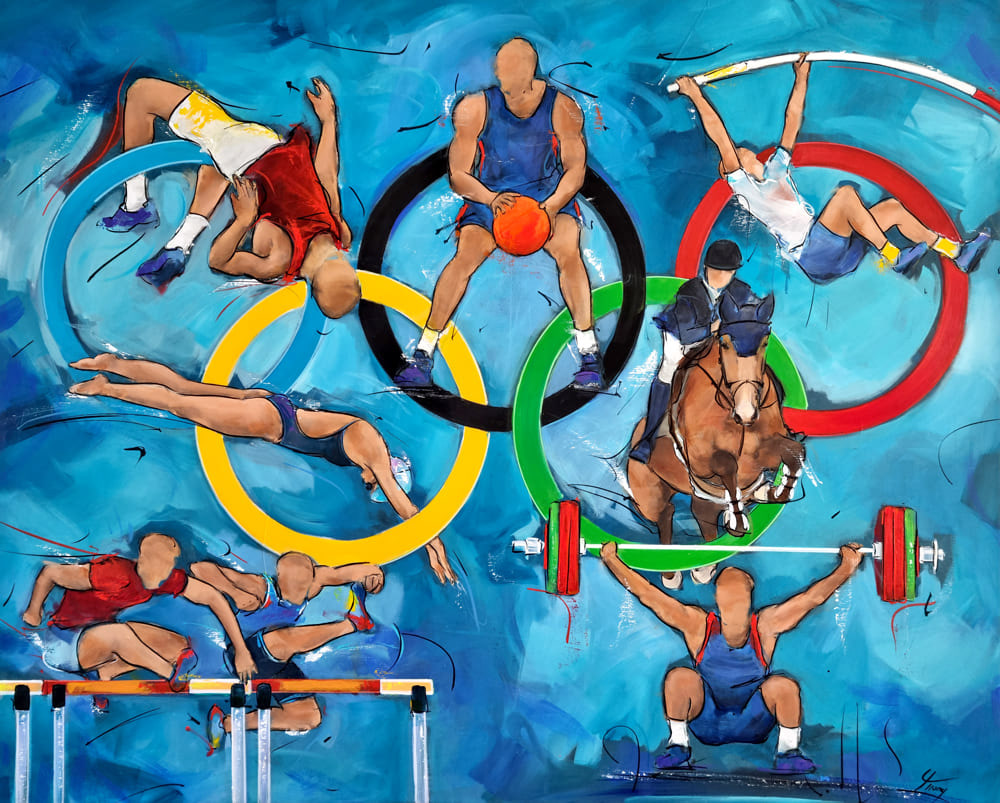
The Olympics are a quadrennial sporting event originating all the way from ancient Greece. The modern counterpart of the ancient Olympics, the one most people watch and know today, has been around since 1896. The events are immensely popular, watched by many around the globe, and anticipated by athletes eager to prove their worth. Nearly all countries participate, each have their own team of athletes, the number of which can range between 600 to only one. The International Olympic Committee (IOC) organises and promotes the Olympics, but also makes decisions on the participation of some countries.
However, the very nature of including nearly all countries on earth can create tension and make the IOC relinquish its impartiality and take sides on major political issues, the result of this would then be broadcast to the millions of people watching the Olympics. This can lead to controversies and backlash, or approval depending on the audience and country. For example, in the 1960 Summer Olympics in Rome, Italy, Taiwan was forced to compete under the name of Formosa, instead of its desired title of the Republic of China. As an act of protest, the athletes of Taiwan all participated with their name tags ripped off. Another, less controversial by modern standards, decision was the banning of South Africa from participating due to its segregationist policies and refusal to commit to ending racial segregation in sports. The ban began in 1964, in the Tokyo Olympics, and officially ended in 1991, just in time for the 1992 Summer Olympics in Barcelona. In many issues however, the IOC remains neutral, despite public outcry for the banning of certain states, for example Russia because of its invasion of Ukraine and Israel because of the ongoing event in Gaza.
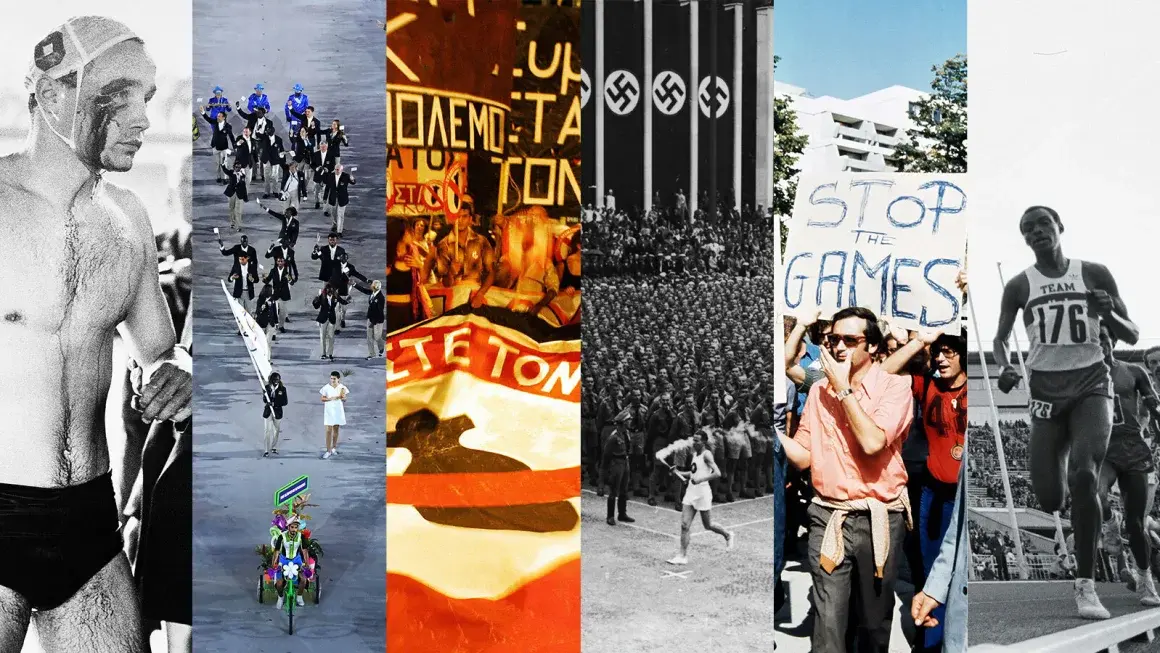
Timeline of Summer Olympic Games that went on amid global conflict (CNN, 23 July 2024)
Nevertheless, it is not only the IOC which can promote its political views on the world stage of the Olympics, athletes pushing for many different agendas make good use of it, and very often. Even as early as 1906, the ten-year anniversary of the first Olympics, in the event now known as the Intercalated Games, Peter O’Connor, an Irishman climbed a flagpole and waved the Irish flag, as protest for being forced to compete as a British athlete. This gained even more publicity, as he had set a world record for the long jump, one that would stand for twenty years.
The abundance of political protests and stances in the Olympics, is not something that the IOC is at fault for. It is simply a symptom of being a large, globally televised sporting event that involves most countries in the world. It is something natural, that there is no way to change, apart from altering the very nature of the Olympics as an event itself.
"The important thing in life is not the triumph but the struggle."
Pierre de Coubertin, educator, historian, and founder of the modern Olympic Games